

Uncategorized
How Psilocybin May Reshape Brain Circuits: What Psychedelic Healing Research Shows
Oct
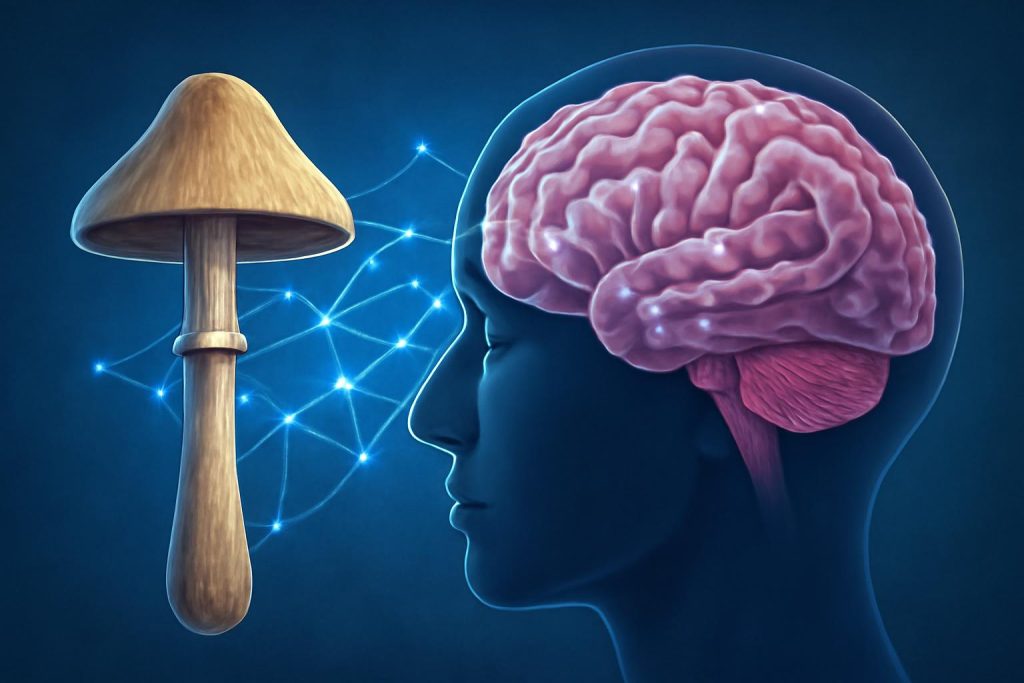
Psilocybin brain circuits have become an important focus in psychedelic healing research. Scientists are studying not only whether psilocybin can reduce symptoms of depression, anxiety, or trauma-related distress, but also how it may change the brain systems involved in mood, attention, self-reflection, and learning.
Recent neuroscience findings suggest that psilocybin can temporarily alter communication between large-scale brain networks. Some researchers describe this as a loosening of rigid patterns: brain regions that usually communicate in predictable ways may interact more flexibly during and after the psychedelic experience. That observation is promising, but it is not proof that psilocybin is a universal treatment or that taking mushrooms without professional support is safe.
This article explains what researchers currently understand about psilocybin and brain connectivity, how these findings may relate to therapy, and why preparation, screening, supervision, and integration remain essential.
What does psilocybin do in the brain?
Psilocybin is a naturally occurring psychedelic compound found in certain mushroom species. After ingestion, the body converts it into psilocin, which interacts primarily with serotonin 2A receptors. These receptors are widely distributed throughout the brain and are involved in perception, cognition, mood, and the processing of meaning.
Rather than acting like a simple stimulant or sedative, psilocybin appears to influence how different brain networks coordinate with one another. Brain-imaging studies have reported changes in functional connectivity, meaning the timing and strength of activity between regions can shift during the psychedelic state.
These changes may help explain why people sometimes report:
- A different sense of time and personal identity
- More vivid emotional experiences
- New perspectives on memories or personal problems
- A feeling of connection with other people or the natural world
- Reduced certainty around long-standing thoughts and beliefs
Subjective effects vary considerably. Dose, setting, expectations, mental health history, medications, sleep, and physical health can all influence the experience.
Brain networks researchers are watching
The default mode network
The default mode network, or DMN, is associated with self-referential thinking, autobiographical memory, planning, and mental time travel. It is active when the mind is focused on internal thoughts rather than an immediate task.
Some imaging research has found that psilocybin temporarily reduces the usual organization or dominance of parts of the DMN. This may relate to the feeling that the normal boundaries of the self have become less fixed. People may experience this as ego dissolution, self-distance, or a break from repetitive internal narratives.
For someone caught in cycles of rumination, this temporary change could create an opportunity to view a familiar concern from a new angle. However, a change in brain connectivity is not automatically therapeutic. Without preparation and integration, an intense experience can also be confusing, frightening, or emotionally destabilizing.
The salience network
The salience network helps the brain decide which internal or external information deserves attention. It includes regions involved in detecting emotionally important events and shifting between different modes of thought.
Psilocybin may change how this network prioritizes information. This could contribute to heightened emotional sensitivity, unusual sensory awareness, or the feeling that certain memories and ideas carry exceptional significance. In a therapeutic setting, careful support may help a person examine these experiences without treating every thought or vision as a literal message.
The executive control network
The executive control network supports planning, decision-making, working memory, and behavioral regulation. During a psychedelic experience, ordinary top-down control may be reduced or reorganized. This can make perception more fluid, but it can also make it harder to manage fear or confusion. For related context, see Buy Premium Psychedelics Online – Trippy 420 Room Dispensary.
After the acute effects have ended, researchers are interested in whether changes in flexibility persist. The goal is not to permanently disrupt organized thinking. Instead, the therapeutic hypothesis is that a short period of increased flexibility may help people learn healthier responses when combined with evidence-based psychological support.
What does “increased connectivity” really mean?
Headlines about psychedelics often use phrases such as “rewiring the brain” or “resetting neural circuits.” These expressions can be memorable, but they may oversimplify the science.
Connectivity does not mean that new brain cells are instantly created or that a person’s personality is permanently rewritten. In neuroscience, connectivity can refer to several different measurements, including synchronized activity, communication between regions, or changes in network organization. Each measurement has limits, and results can differ depending on the imaging method and study design.
Laboratory research has also explored the possibility that psychedelics may promote forms of neuroplasticity, including changes in how neurons form or strengthen connections. Much of this work remains preliminary, and findings from cells or animals cannot be assumed to apply directly to people receiving psychedelic therapy.
The most accurate interpretation is more cautious: psilocybin may temporarily alter network dynamics and may create conditions in which learning or emotional updating becomes more possible. Whether that opportunity leads to lasting improvement depends on many factors.
Why brain flexibility may matter in psychedelic therapy
Several mental health conditions involve persistent patterns of attention, avoidance, self-criticism, fear, or negative prediction. These patterns can become deeply practiced. A person may understand intellectually that a thought is unhelpful while still feeling unable to respond differently.
Researchers are investigating whether psilocybin-assisted therapy can create a period in which these patterns become less rigid. During this period, carefully guided therapeutic work may help a person:
- Notice automatic thoughts without immediately accepting them
- Approach difficult emotions with less avoidance
- Reconsider fixed beliefs about the self or the future
- Practice self-compassion and emotional regulation
- Connect insights from the session to everyday behavior
This model is sometimes described as a window of opportunity. The medicine may open the window, but the therapeutic environment and the person’s continued effort help determine what happens next.
Psilocybin is not a substitute for clinical assessment
Promising research does not mean psilocybin is appropriate for everyone. People with a personal or family history of psychotic disorders, bipolar I disorder, or certain unstable psychiatric conditions may face increased risks. Psilocybin can also interact with medications and may be medically unsuitable for people with particular cardiovascular or neurological concerns.
Screening should include physical health, mental health, current medications, substance-use history, family history, and the person’s support system. A reputable research program or legal service should explain possible benefits, risks, alternatives, confidentiality practices, emergency procedures, and follow-up care before a session takes place.
Anyone considering psychedelic care should avoid stopping prescribed medication without speaking with the prescribing clinician. Combining substances, using unknown products, or attempting to manage a high-intensity experience alone can create serious risks.
Why setting and support affect the experience
Set and setting are not vague extras. “Set” refers to a person’s mindset, expectations, intentions, and emotional state. “Setting” includes the physical environment, people present, level of privacy, and quality of support.
A calm, structured environment may reduce avoidable distress. Skilled facilitators can help participants understand that unusual sensations and emotions can pass, while also recognizing when medical or psychological intervention is needed. Support should not involve coercion, exaggerated promises, or pressure to disclose more than a participant wishes.
Integration is equally important. After an experience, a qualified therapist may help the participant organize memories, identify practical changes, and distinguish useful insight from interpretations that require further reflection. Integration is not about forcing a positive meaning onto a difficult session. It is about processing what happened safely and constructively.
How to evaluate claims about psilocybin research
As interest grows, consumers will encounter marketing claims that go far beyond the evidence. Use a careful checklist when evaluating a study, clinic, or online discussion:
- Look for the study design. Randomized controlled trials and carefully designed observational studies provide different levels of evidence.
- Check the sample size. A small early study can be valuable, but its results may not generalize to everyone.
- Separate symptoms from diagnoses. A temporary mood improvement is not the same as treating a complex psychiatric disorder.
- Ask about follow-up. Durable outcomes require assessment beyond the day of the psychedelic session.
- Watch for universal promises. Claims that mushrooms cure depression, trauma, addiction, or every emotional problem are not responsible.
- Consider the full protocol. Results from supervised therapy cannot automatically be applied to unsupervised mushroom use.
For general education about products and the difference between wellness information and medical care, readers can explore the Trippy 420 Room dispensary homepage. Product information should never replace professional screening or local legal guidance.
Legal status and access in the United States
Psilocybin remains federally controlled in the United States, and state laws differ substantially. Some jurisdictions permit regulated research or specific therapeutic frameworks, while others continue to prohibit possession, cultivation, sale, or use. Decriminalization, reduced enforcement priority, and a legal therapy program are not the same thing.
Before pursuing any psychedelic service, verify the current rules where you live. Confirm whether the provider is operating under a recognized state framework, a registered research study, or neither. Be cautious of services that promise guaranteed delivery, guaranteed therapeutic results, or nationwide legality.
Legal uncertainty also creates safety concerns. Unregulated products may be misidentified, contaminated, inaccurately labeled, or combined with other substances. Packaging and privacy claims do not establish that a product is legal or medically appropriate.
Frequently asked questions
Does psilocybin permanently rewire the brain?
Current evidence does not support the idea that psilocybin permanently rewires everyone’s brain in a predictable way. Studies suggest temporary changes in brain-network communication and possible effects on plasticity, but the duration and clinical meaning of these changes remain under investigation.
Can psilocybin treat depression without therapy?
Research protocols typically include preparation, supervision, and follow-up therapy. It is not established that unsupervised psilocybin use provides the same benefits. People with depression should discuss treatment options with a qualified health professional, especially if they have suicidal thoughts, mania, psychosis, or medication concerns.
Are brain scans proof that psychedelic therapy works?
No. Brain scans can help researchers develop explanations for subjective and clinical effects, but a connectivity change is not itself proof of symptom improvement. Outcomes must be evaluated through clinical measures, participant reports, safety monitoring, and longer-term follow-up.
What is the safest way to learn about psychedelic therapy?
Start with a licensed medical or mental health professional who understands your history. For research participation, use recognized clinical-trial channels and review eligibility, consent, risks, and follow-up requirements. Do not rely on anonymous sellers or online claims that promise a guaranteed healing experience.
A promising field that still requires humility
Research into psilocybin brain circuits is helping scientists move beyond simplistic explanations of psychedelic experiences. The emerging picture involves temporary changes in network organization, emotional processing, attention, and the potential for learning. These findings may eventually improve treatments for certain mental health conditions, but they do not eliminate risk or replace careful clinical practice.
The most responsible approach is hopeful and evidence-aware: respect the potential, acknowledge the uncertainties, follow applicable laws, and prioritize screening, supervision, and integration. Psychedelic healing is not defined by the substance alone. It depends on the quality of the research, the safety of the setting, and the support available before and after the experience.
